Ten days rested. Twenty minutes over a far fire.
Aged Sawara, Far FireJukusei Sawara
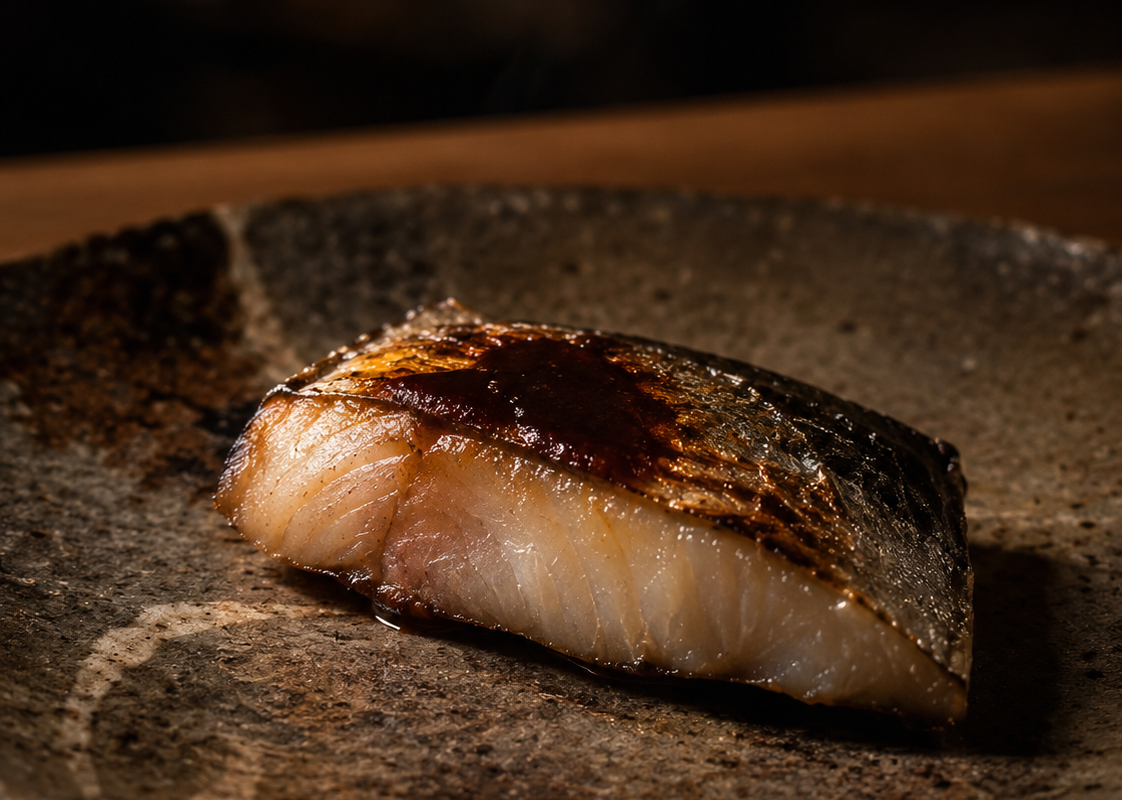
Spanish mackerel from Akashi, rested ten days until the fat runs clear, then held twenty minutes over a far fire. One brushstroke of hishio.
Charcoal isanother wordfor waiting.
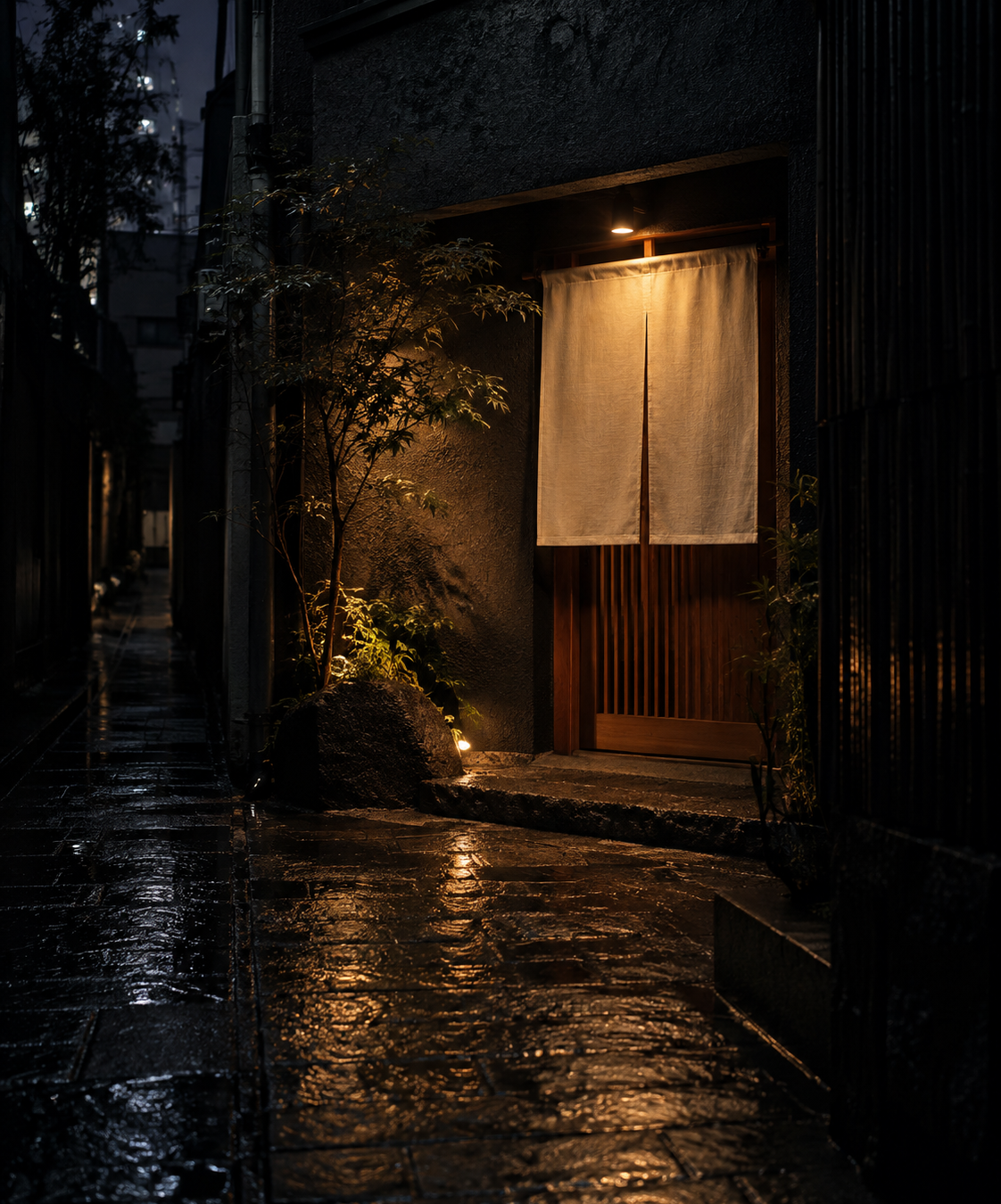
NishiazabuSumibi Kappou Akari
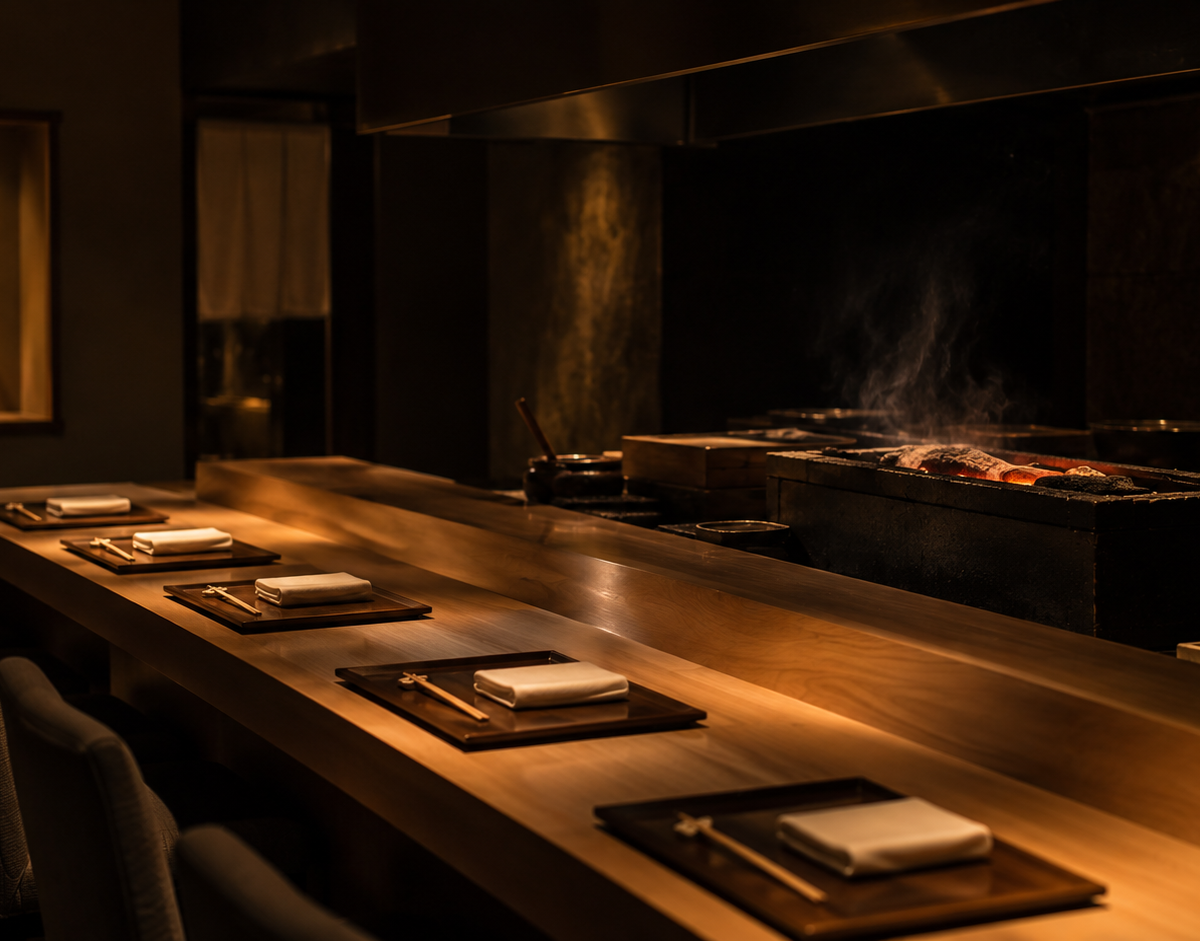
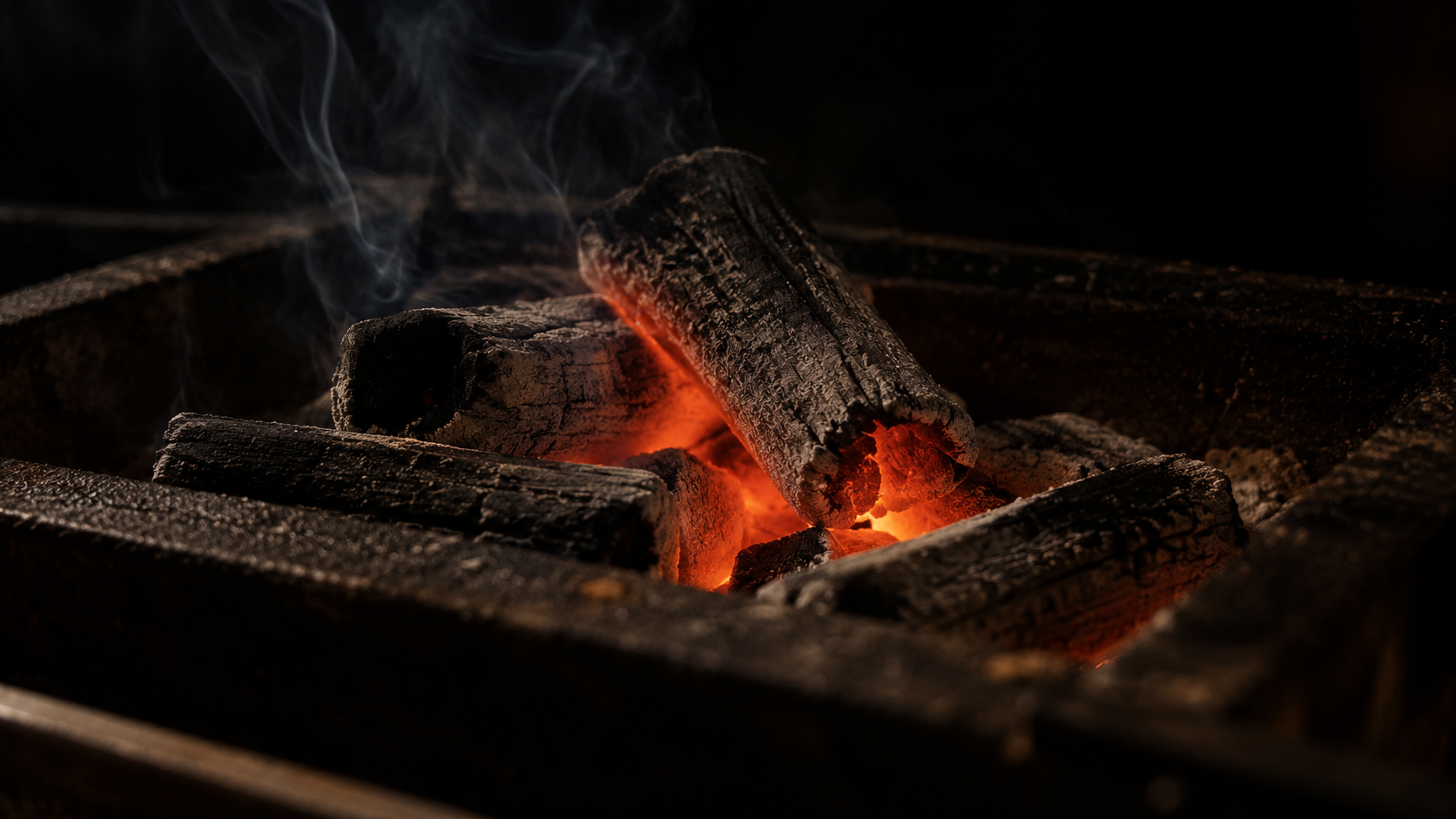
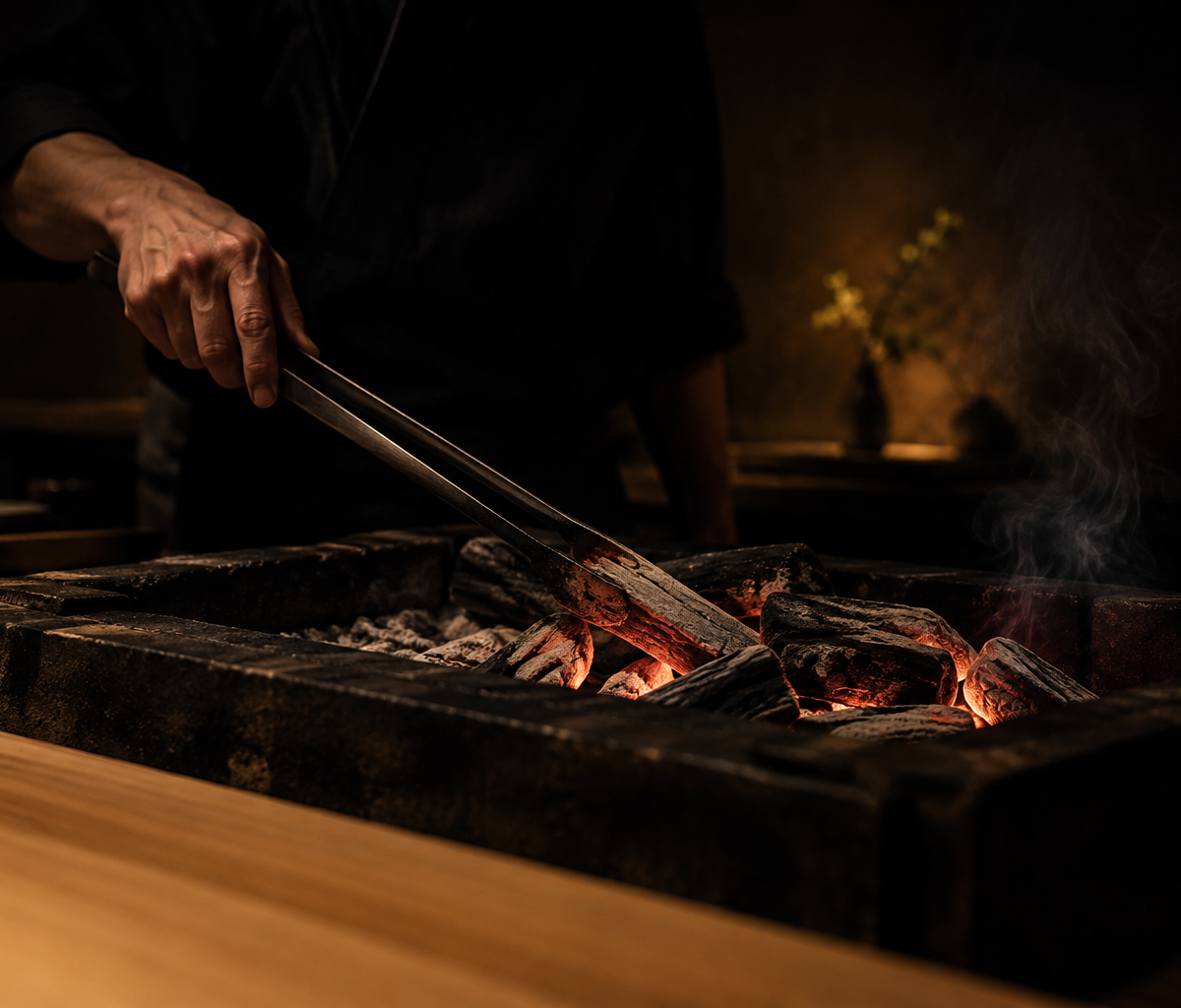
Binchotan takes about forty minutes to come good. In that time we look in on the hishio barrels, put a hand to the fish in the ageing room, and settle on the heat for the night. The work is mostly waiting for the moment a thing opens up.
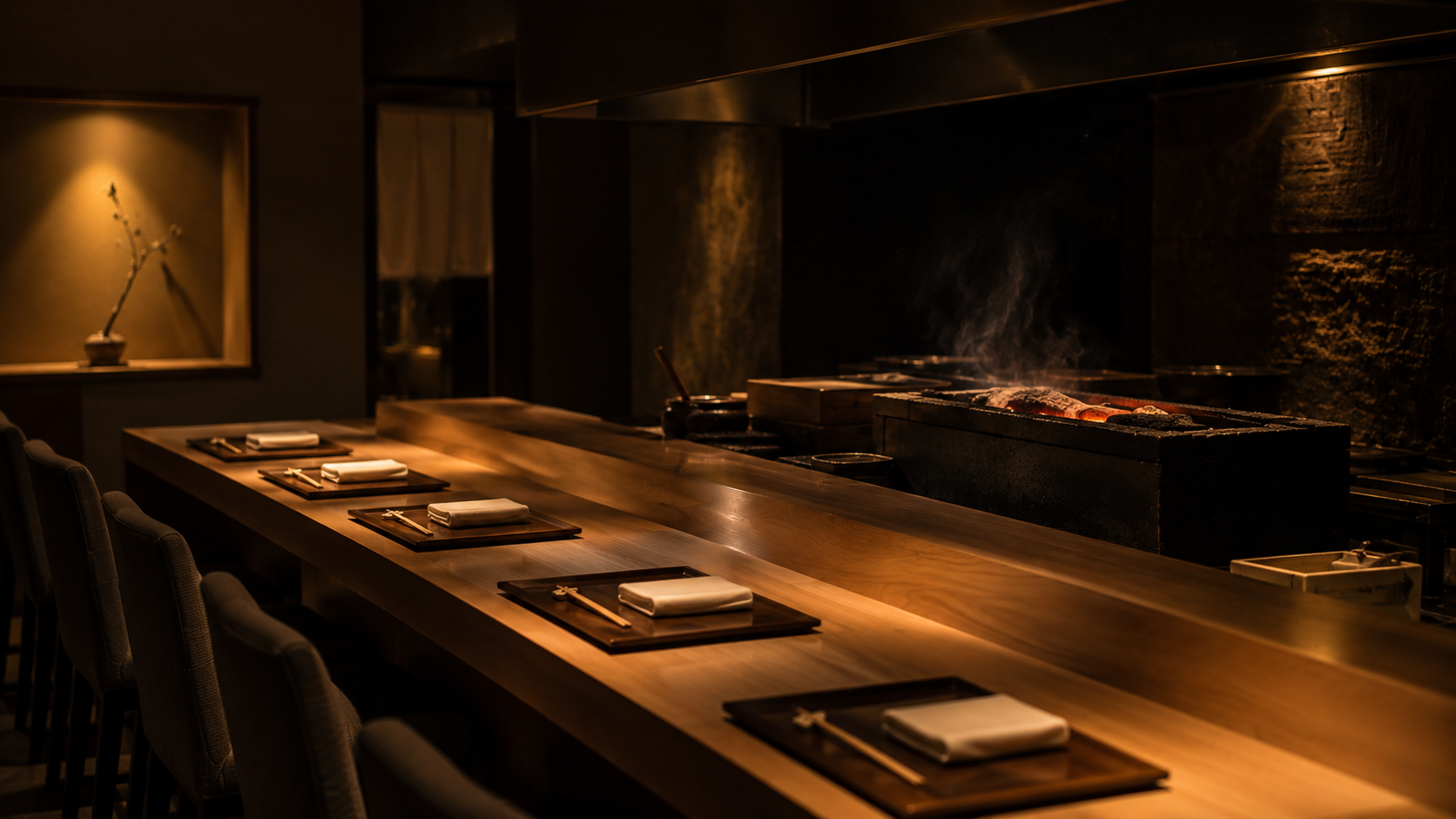
Eight seats at the counter. Coals cracking an arm away, fat falling — and not much else to listen to.
Eight seats only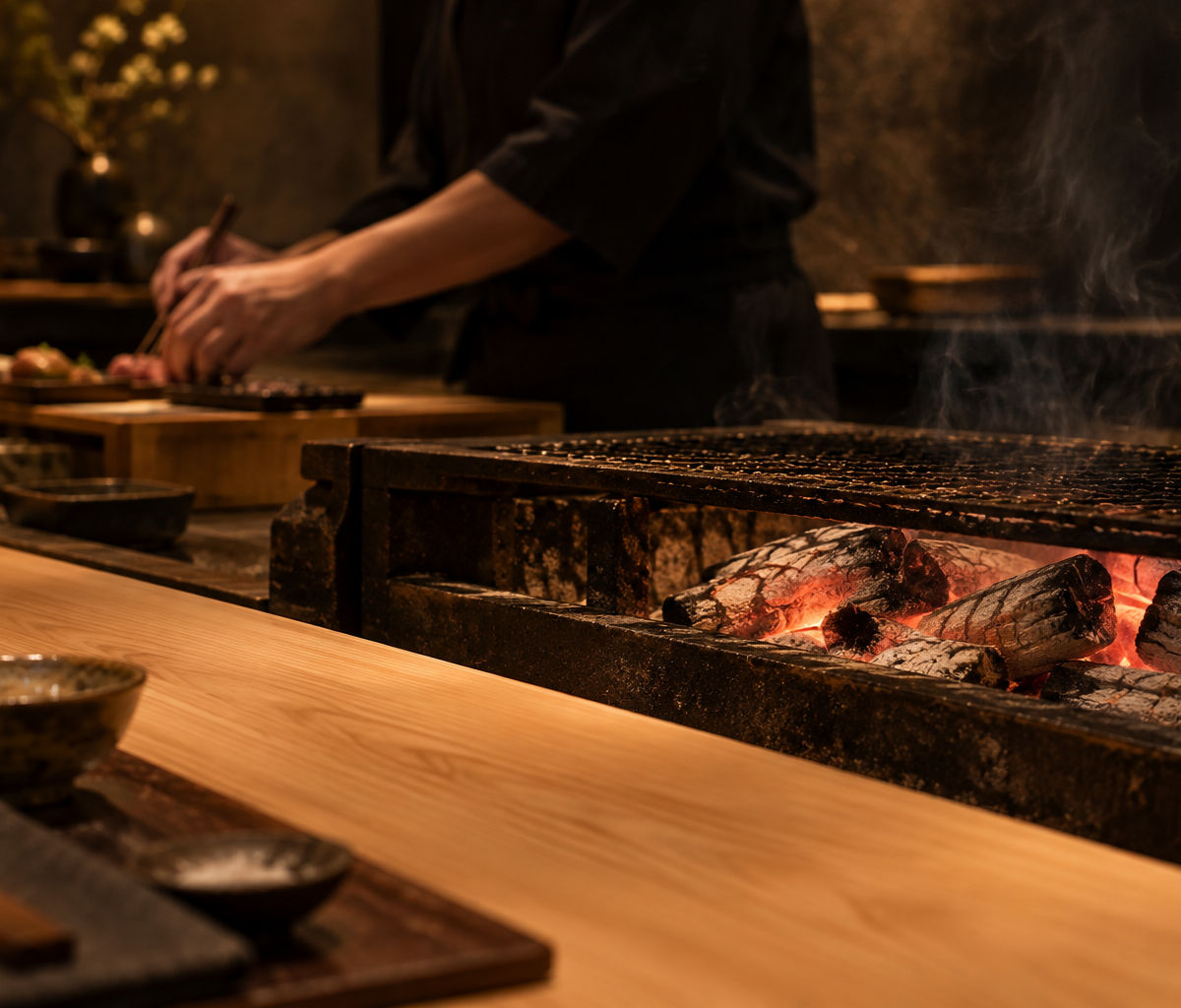
The fish that landed and how the barrels are running decide the night. These recur most often.
Ten days rested. Twenty minutes over a far fire.
Spanish mackerel from Akashi, rested ten days until the fat runs clear, then held twenty minutes over a far fire. One brushstroke of hishio.
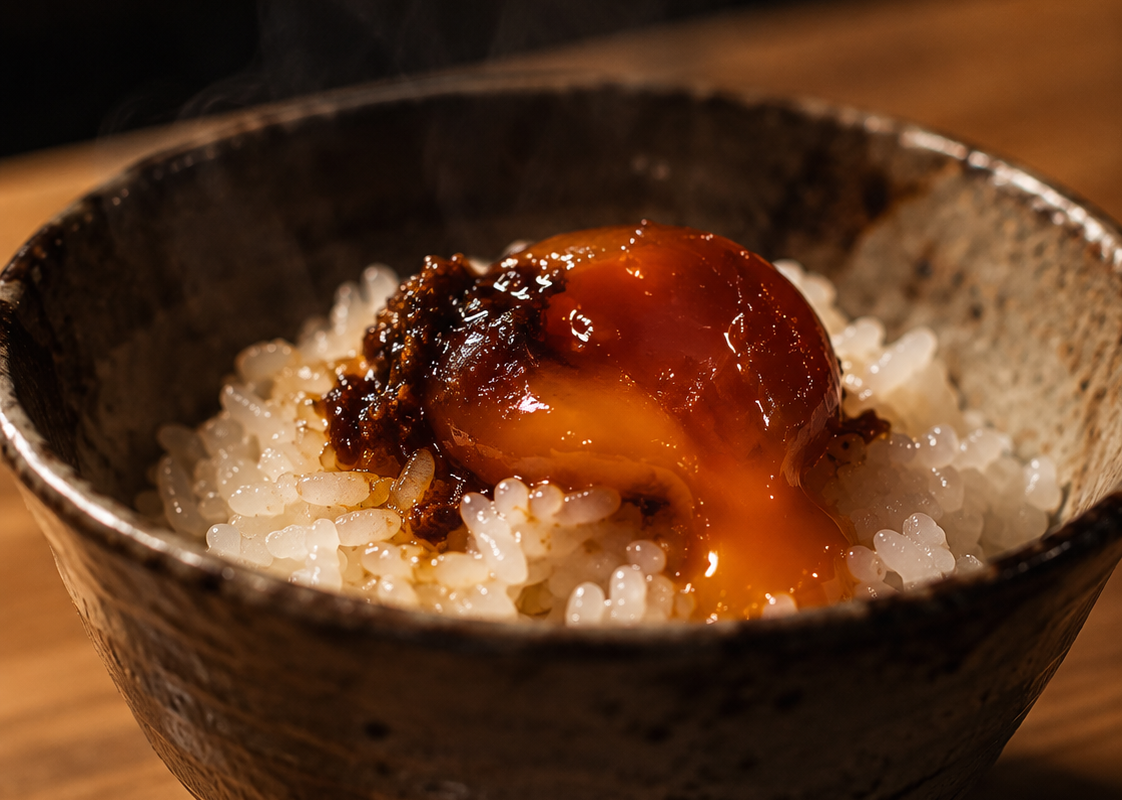
Two nights in the three-year barrel.
A yolk sunk two nights in three-year hishio. Served over warm rice — break it slowly.
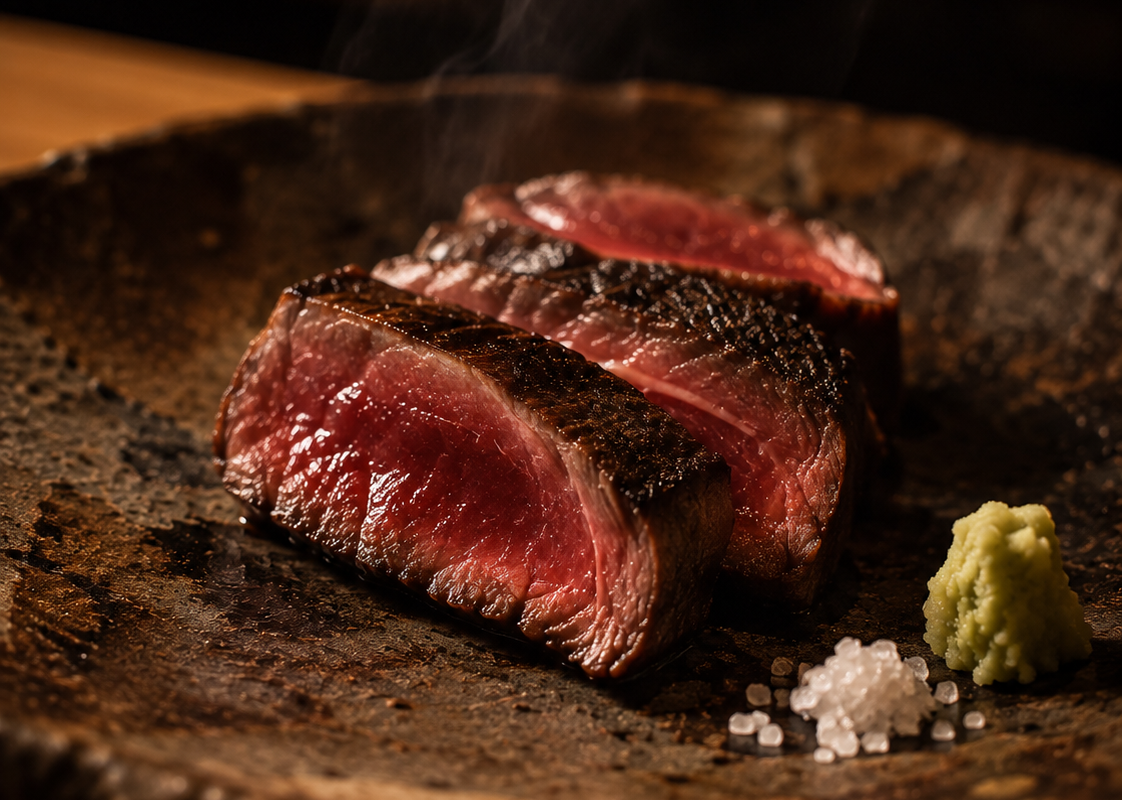
Direct flame, surface only.
Yamagata shorthorn. Hard flame on the surface only, raw at the centre. Salt and wasabi, nothing else.
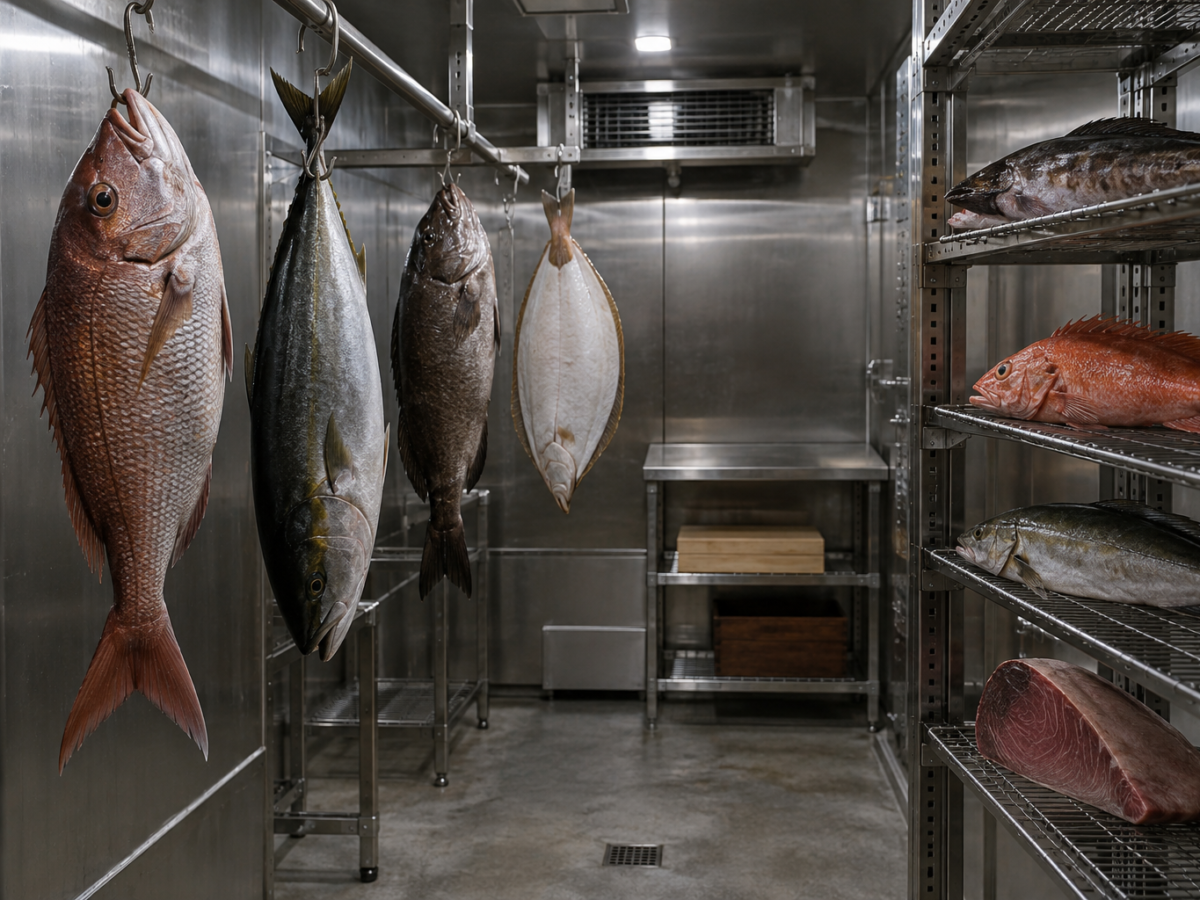
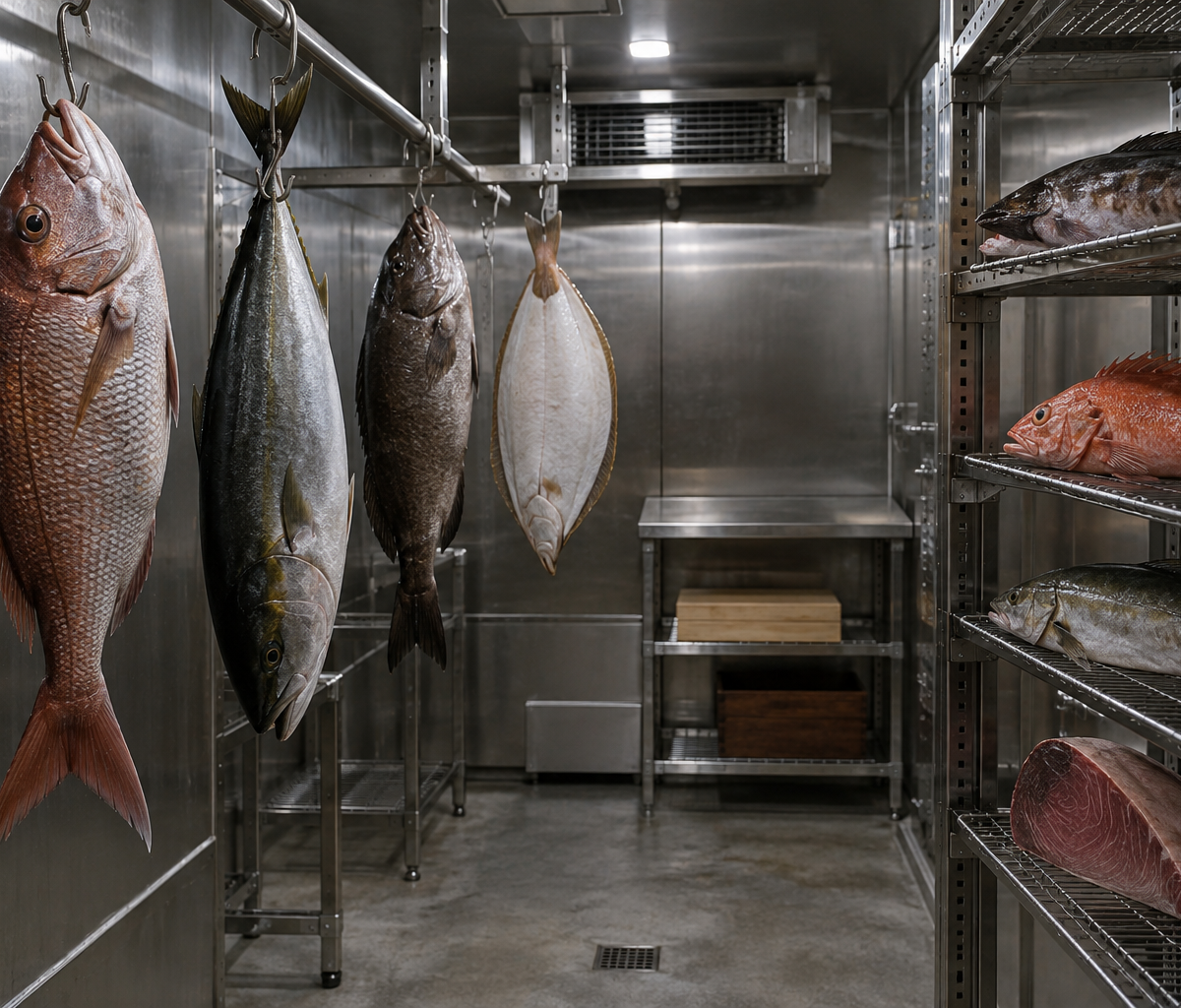
Fish arrives from the set nets of Tsushima, killed at dawn and shipped whole. It is broken down the day it lands and never touches water again. The room holds at one degree, seventy-five percent humidity. Seven days to twenty, depending on the fish — we serve it on the day the flavour is widest, not the day it is convenient.
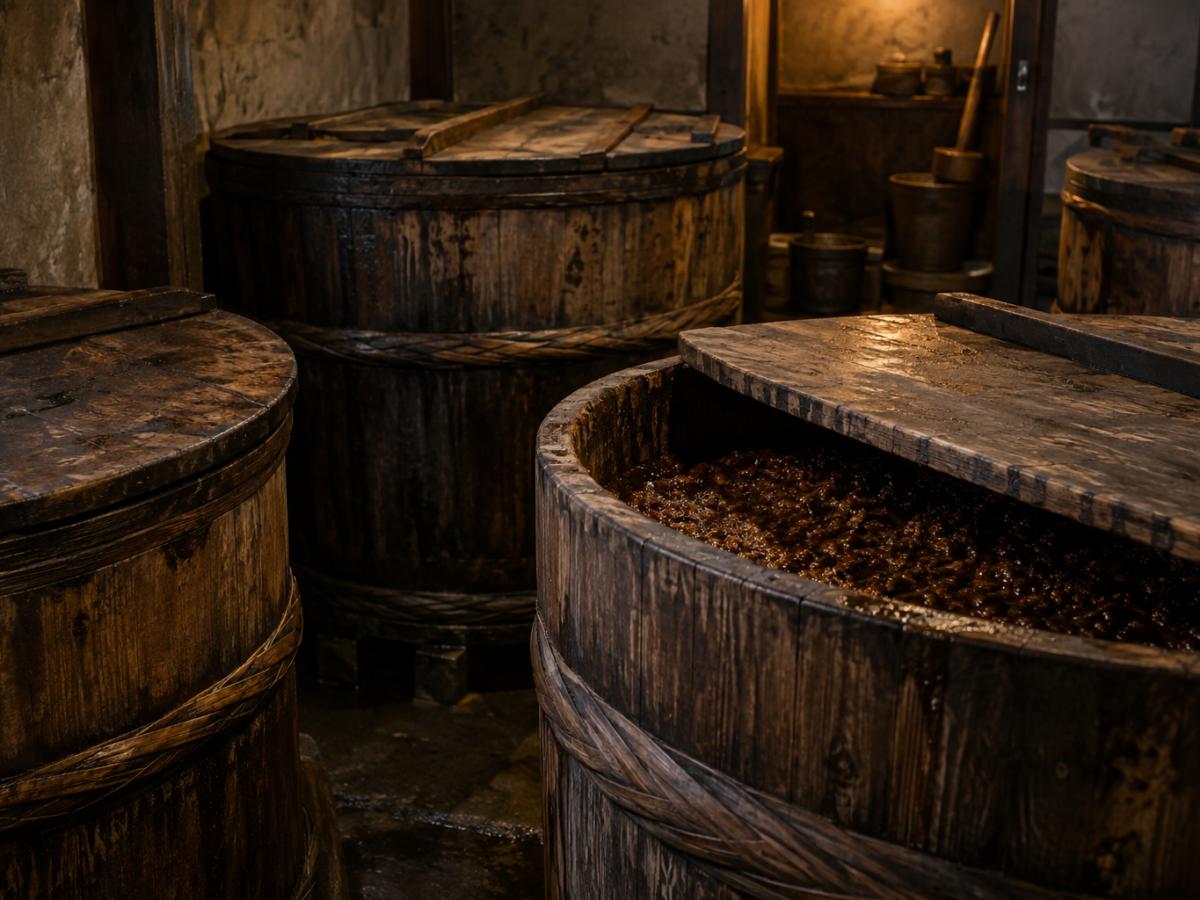
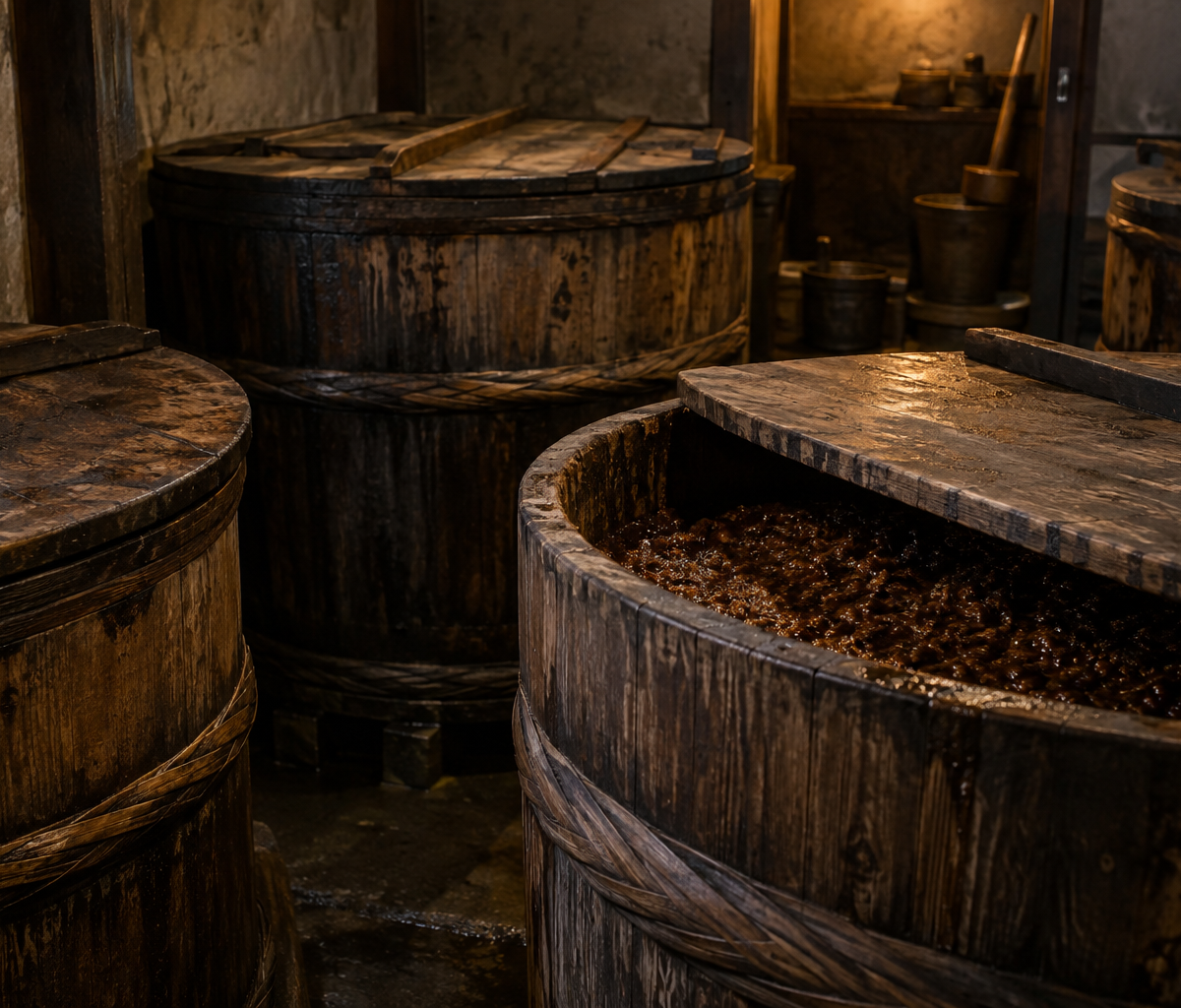
Soy beans, barley, salt, koji. Nothing else, three years in cedar. We started brewing three years before the doors opened, and now run one-year, two-year and three-year barrels in parallel. Each dish takes the one it needs. When a barrel runs low, the menu changes rather than the recipe.
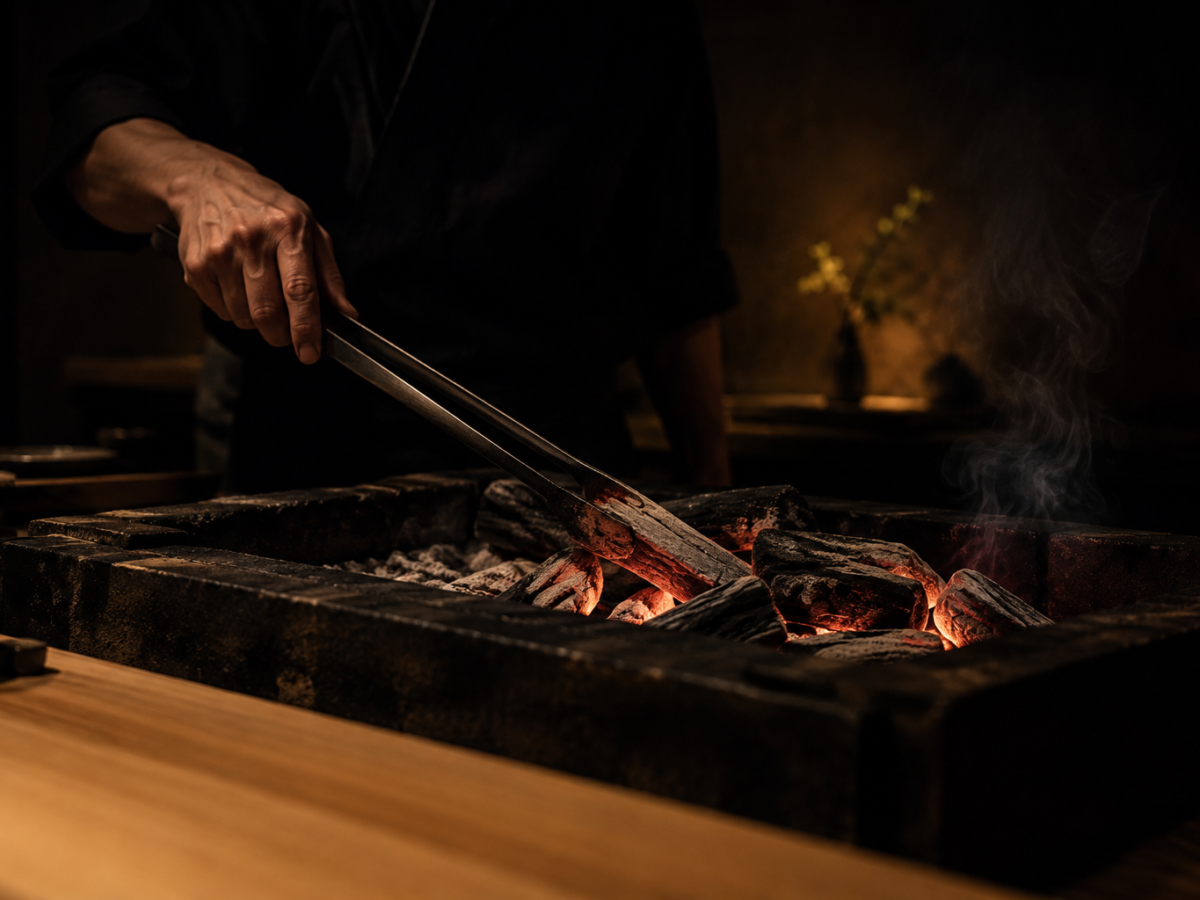
White charcoal of ubame oak from the kilns at Tanabe. Forty minutes before the fire is ready, and only four hours of usable heat after that. We work twenty-five centimetres above the coals — no scorch on the surface, heat all the way to the centre. That distance is the whole craft.
This is a demonstration site for a fictional restaurant. The address, telephone number and map are invented.
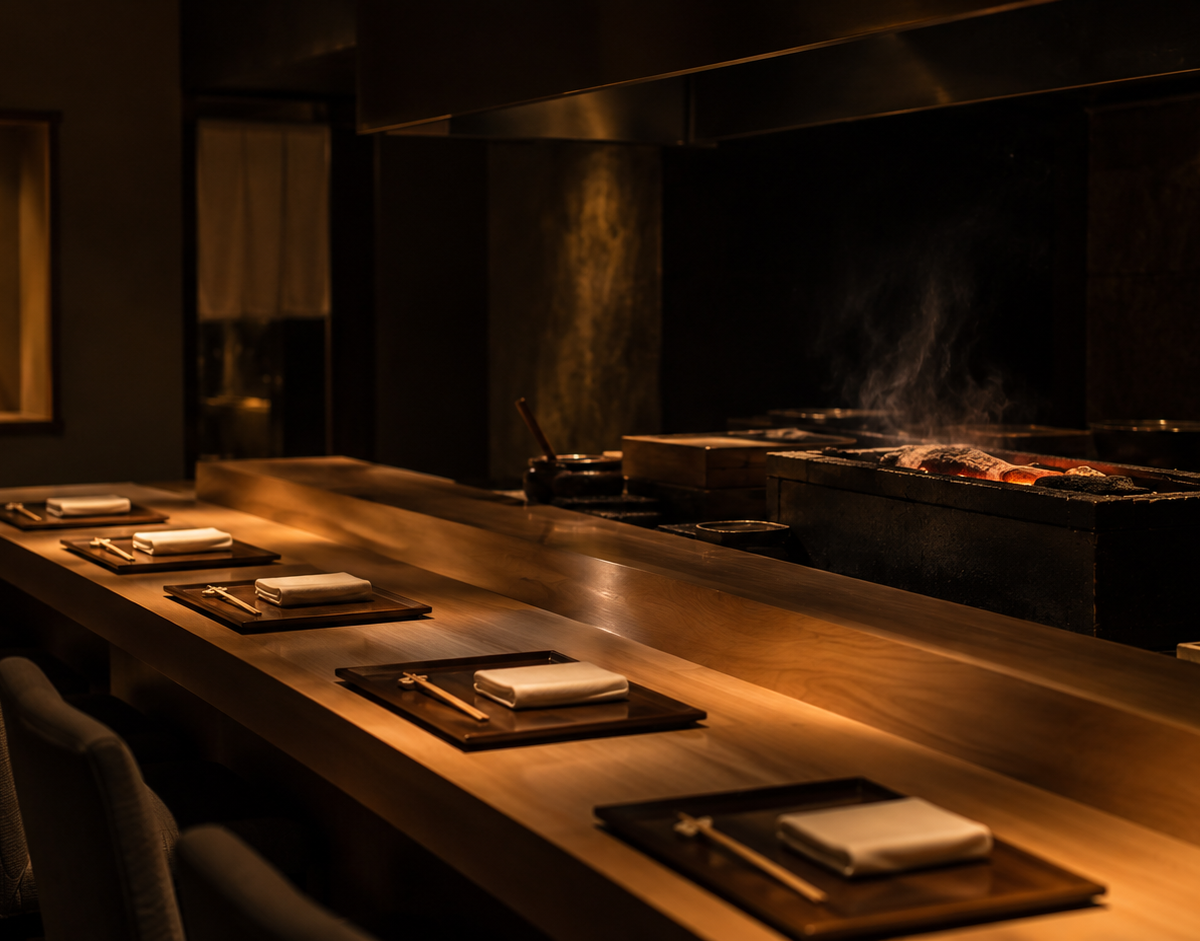
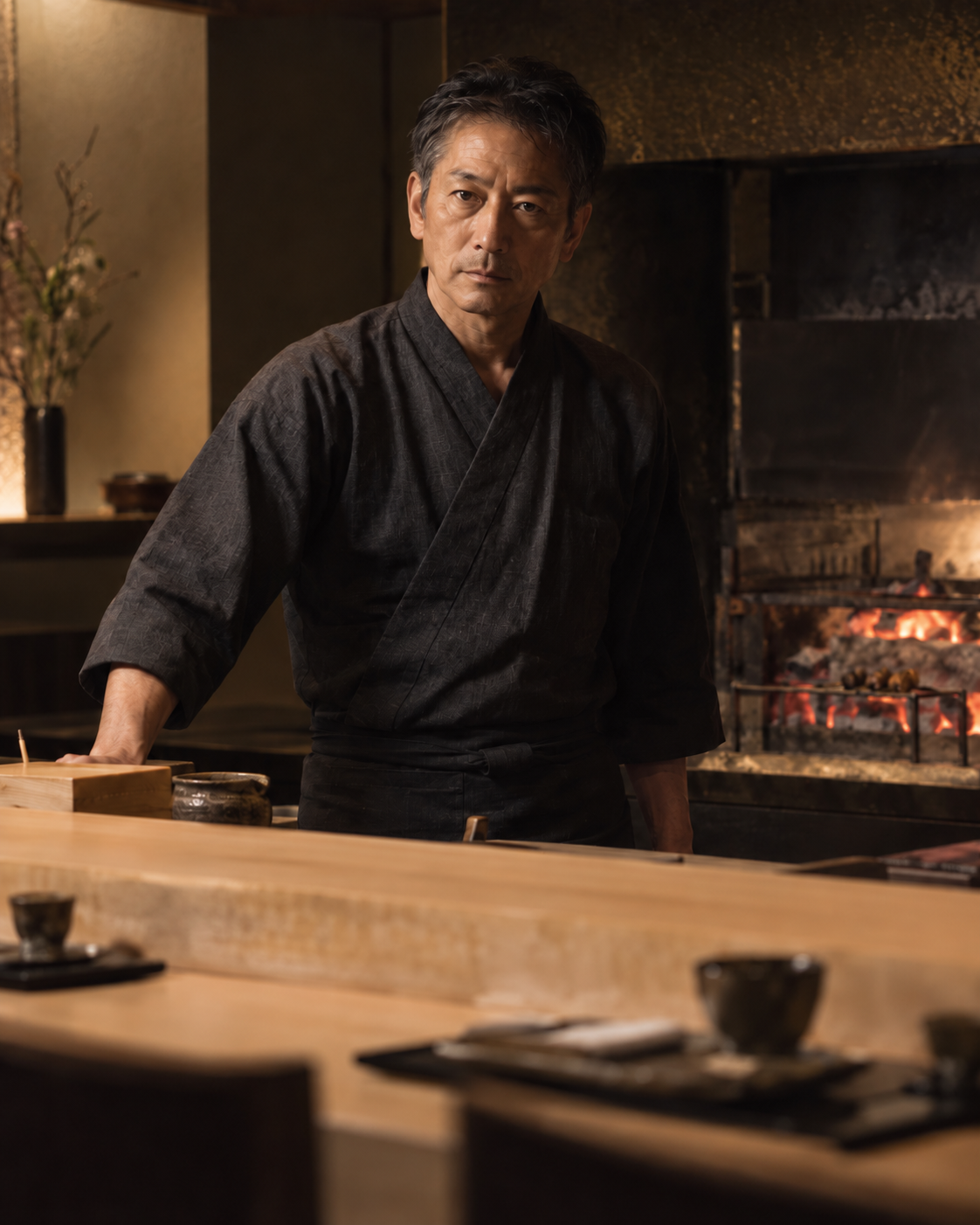
Fire will not move to suit you. So you move to suit it. That is all this is.
Born 1979 in Murakami, Niigata, above a dry-goods shop that cured salmon through the winter. He left for Tokyo at eighteen, spent eight years in a Japanese kitchen in Kyobashi, then five more at a kappou in Kanazawa.
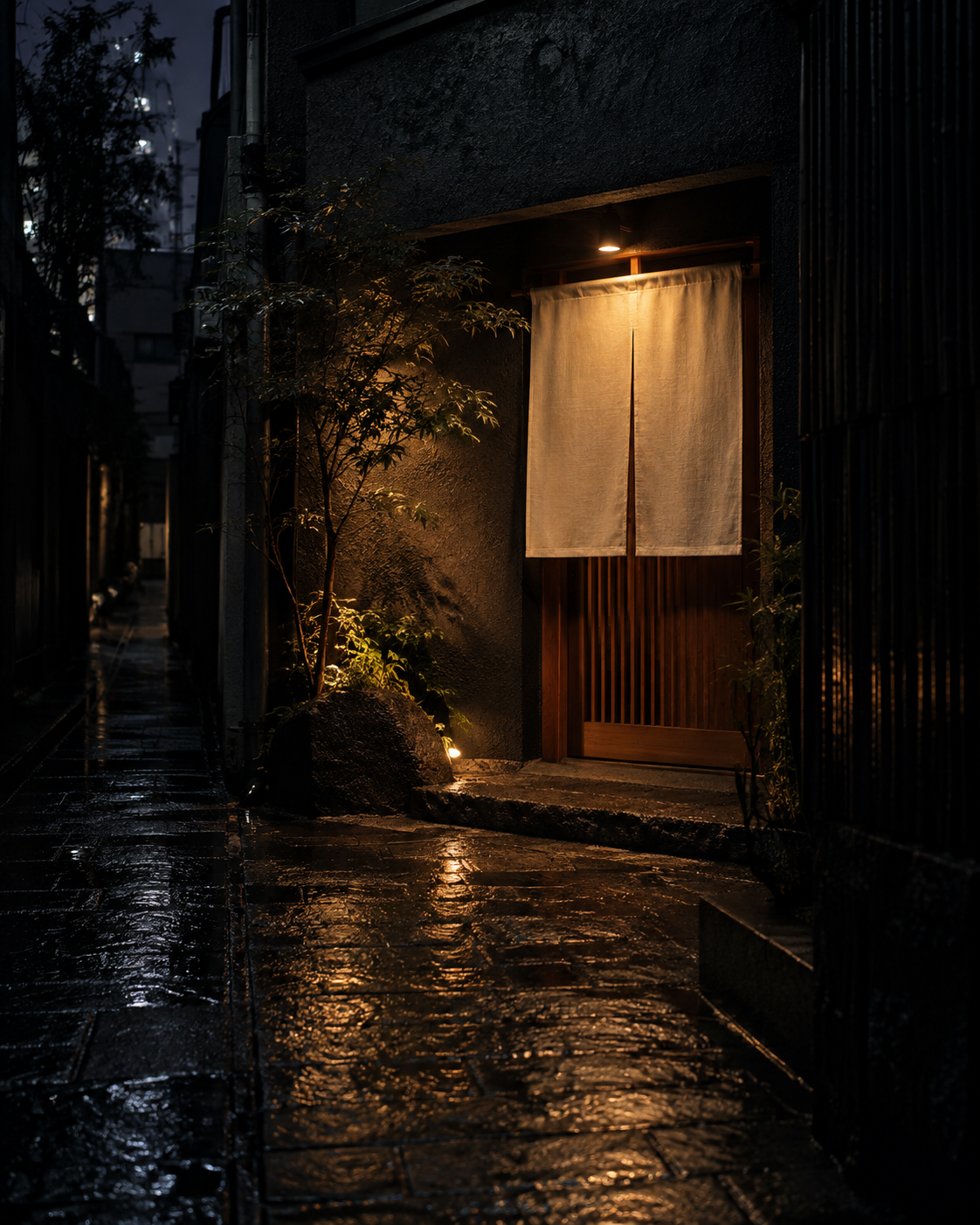
At thirty-two he stepped away from the stove entirely — six months living at a charcoal kiln in Wakayama, six more at a soy brewery in Kyushu. “I wanted to know how the material was made before I kept cooking it.” Akari opened in a Nishiazabu back lane in 2018, eight seats, and he still buys, preps and grills alone.
Two hours with almost no sound in the room except the coals. The pause before the grilled course arrives is part of the cooking.
I had always avoided aged fish. Nothing here was heavy; it was clearer than fresh. The restraint with the hishio is the whole point.
Eight seats means booking is genuinely hard. Worth it. I reserved three months out again before I had finished the rice.